
Research: Ultrafast
Ultrafast X-ray Heating
======
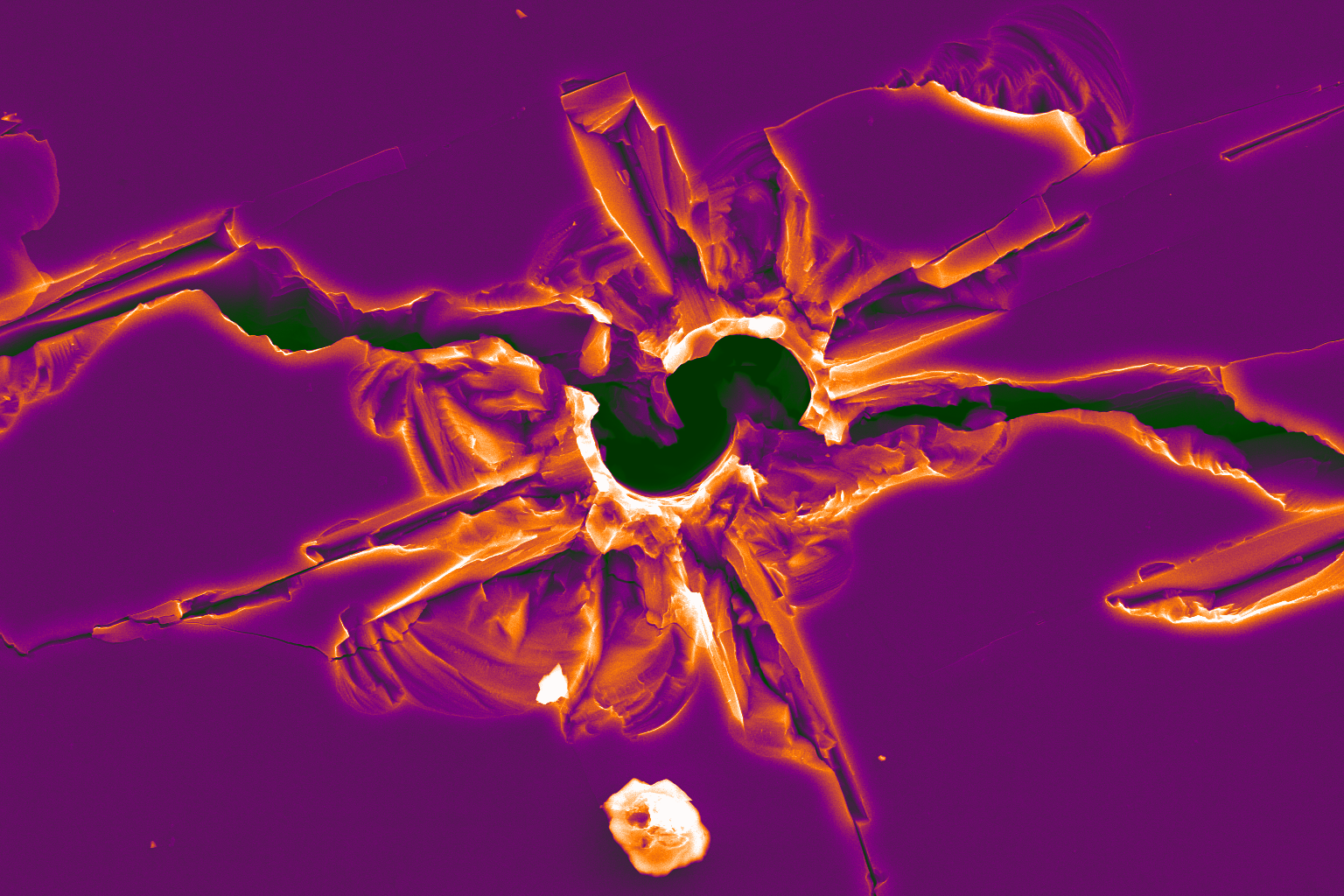
Due to their intensity, XFEL pulses can be used to heat samples. Unlike most heating methods, using laser or particle irradiation, this is both very fast, limited only by the duration of the pulse, and heats throughout the depth of a target. This means that materials can go from ambient conditions to highly ionized within only a few tens of femtoseconds, giving the ions no time to equilibrate. The subsequent evolution is almost impossible to predict using current methods, and so our work aims to understand it better, and improve models of the behaviour.
Compuational Modelling
======
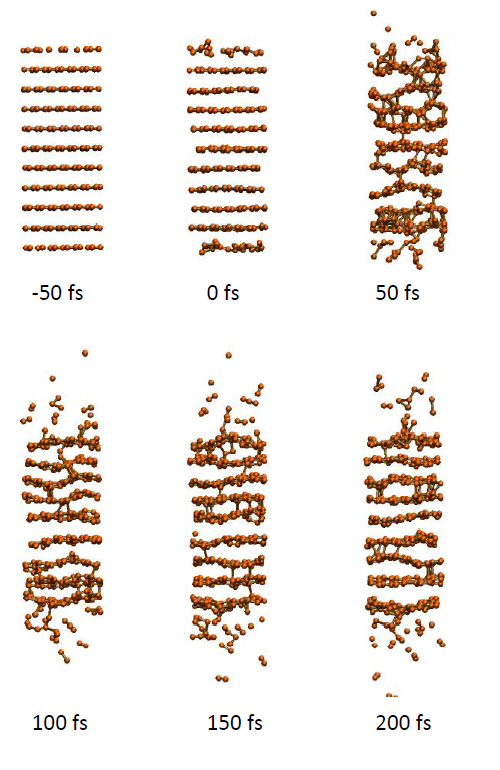
Using the hybrid simulation codeXTANT, we can simulate the evolution of atomic positions and structure after heating by the X-rays. The results of this are compared to those we get in the experiment, allowing us to both understand what leads to the data we see, and further fine-tune the models.